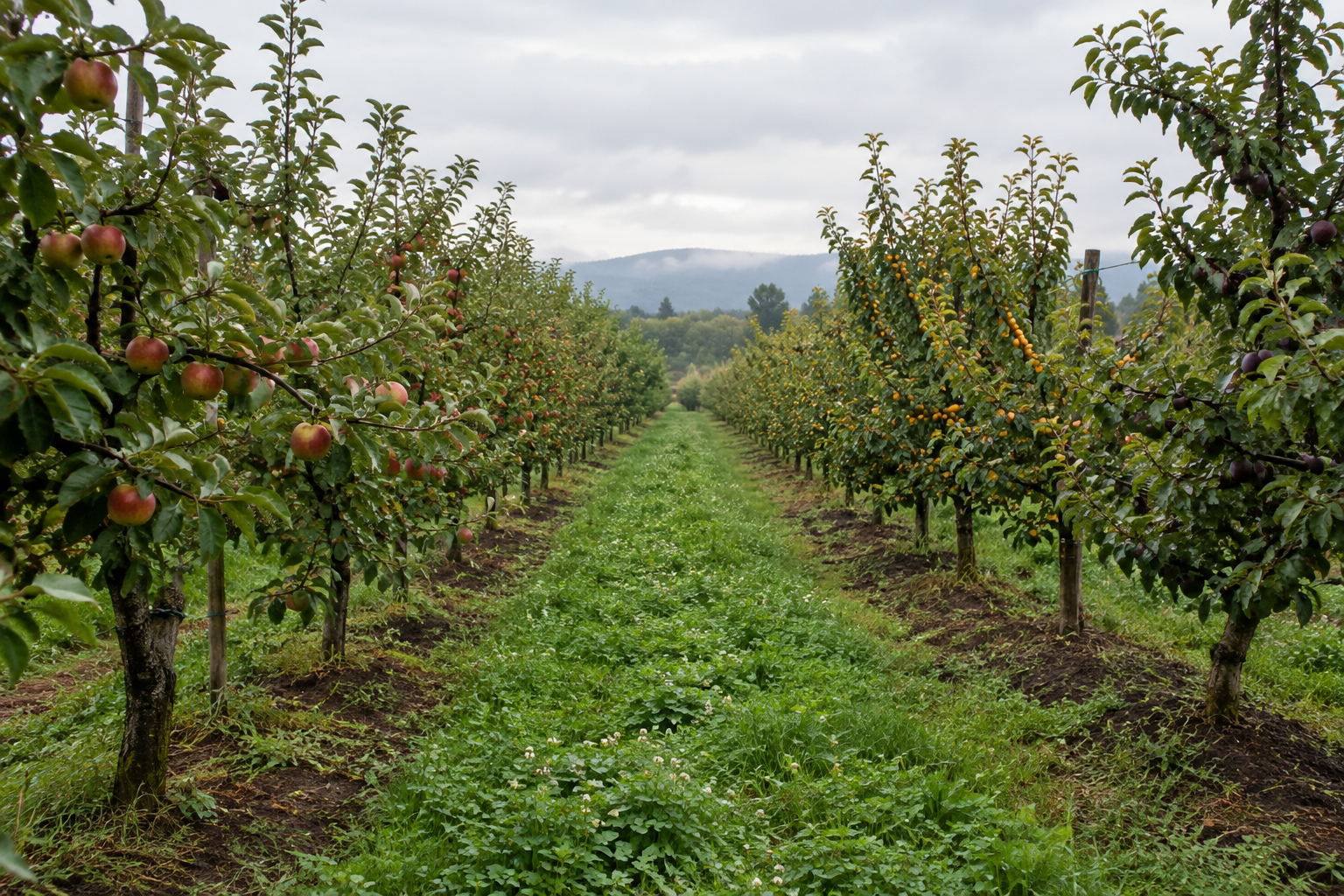
Orchard Planning
Site, block, and infrastructure first
Site selection, block design, workflow, and long-term infrastructure decisions set the baseline for resilience, labor flow, and future adaptation capacity.
Orchard Management
Site, tree layout, soil, water, prevention, and long-horizon stewardship shape each other through every season.
Good management starts with planning and continues through measured adjustments. Decisions on spacing influence airflow and pest pressure, soil structure affects irrigation efficiency, and prevention choices determine long-term resilience. The aim is steady performance, not short-term fixes.
Management systems
Orchard resilience comes from connected planning choices, not isolated fixes. Use this framework to align site conditions, layout, water strategy, and planting decisions before establishment.
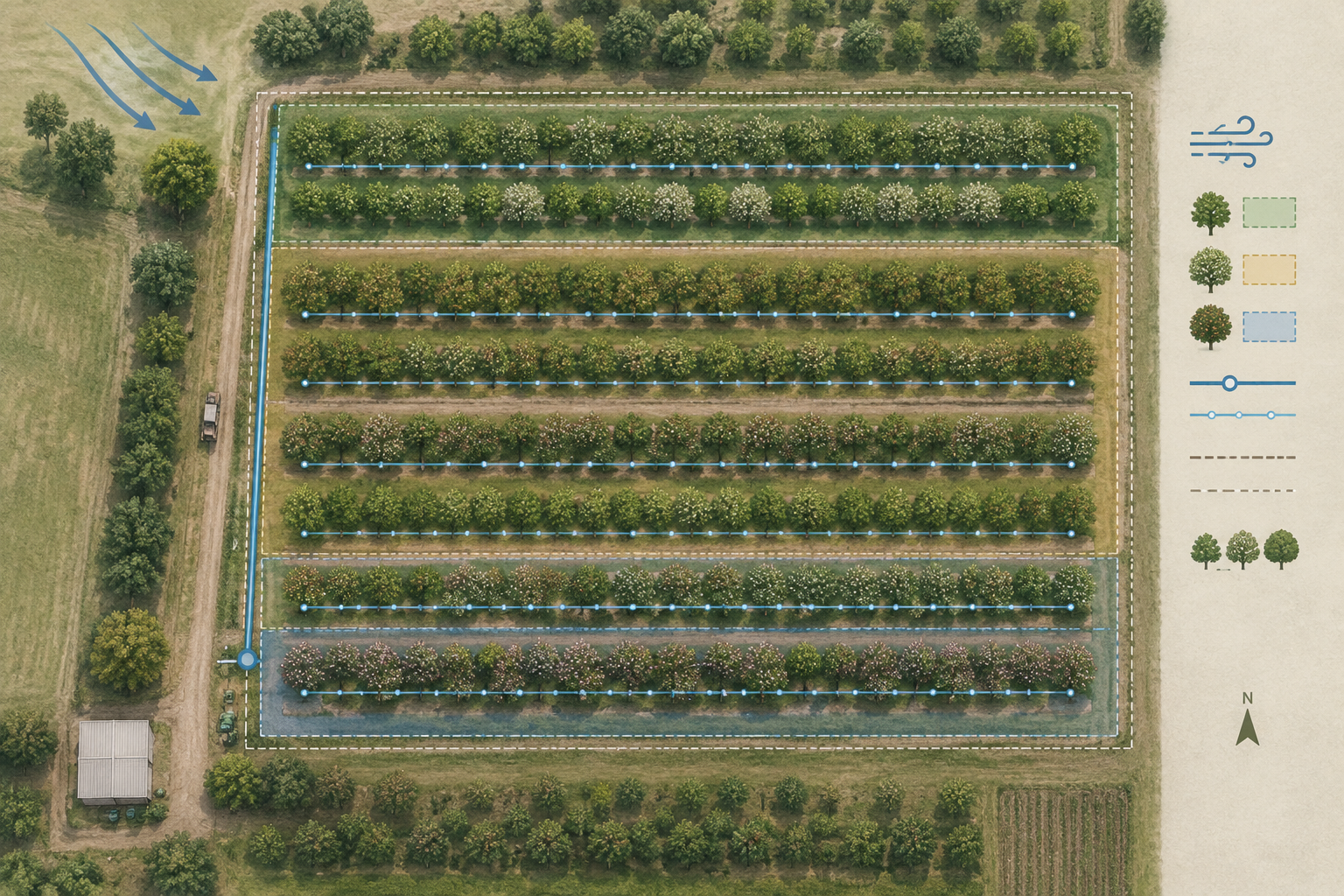
Orchard Planning
Site selection, block design, workflow, and long-term infrastructure decisions set the baseline for resilience, labor flow, and future adaptation capacity.
Tree Spacing
Spacing influences airflow, light interception, equipment movement, labor efficiency, and disease pressure across seasons and canopy stages.
Irrigation Planning
Water delivery should reflect soil variability, climate demand, root volume progression, and operational constraints such as filtration, pressure, and maintenance access.
Variety and Rootstock Fit
Production objectives, site limits, vigor control, and management intensity together determine which variety–rootstock pairings are most suitable and durable.
Long-term orchard stewardship
Soil, water, and prevention decisions compound over seasons. This framework keeps core care practices visible, measurable, and adaptable without reactive drift.
Organic matter, stable structure, rooting conditions, and biological activity support resilient orchard systems and more stable seasonal responses.
Efficient irrigation, moisture retention, and careful observation reduce stress and waste over time while preserving crop quality under variable conditions.
Monitoring, prevention, thresholds, and habitat awareness reduce reactive decision-making and keep interventions proportionate.
Airflow, sanitation, pruning, and site awareness influence disease risk before symptoms become severe and harder to contain.
Long-term orchard health depends on balanced production goals, soil care, biodiversity, and adaptive management across seasons.